

Choosing the Right Hydraulic Manifold Block for Your System
/ 1
Hydraulic systems power a wide range of industrial equipment, from manufacturing machinery to mobile plant and heavy-duty engineering applications. At the heart of many of these systems are hydraulic manifold blocks, which act as central hubs for directing and controlling hydraulic fluid between pumps, valves and actuators.
Choosing the right manifold block is critical for achieving an efficient and reliable hydraulic system configuration. The correct design can simplify system layouts, reduce leak points and improve overall performance, while the wrong choice can lead to pressure losses, maintenance challenges and unnecessary complexity.
In this guide, we’ll explore what hydraulic manifold blocks are, how they improve system efficiency, and the key factors to consider when selecting the right manifold design for your application.
What Is A Hydraulic Manifold Block?
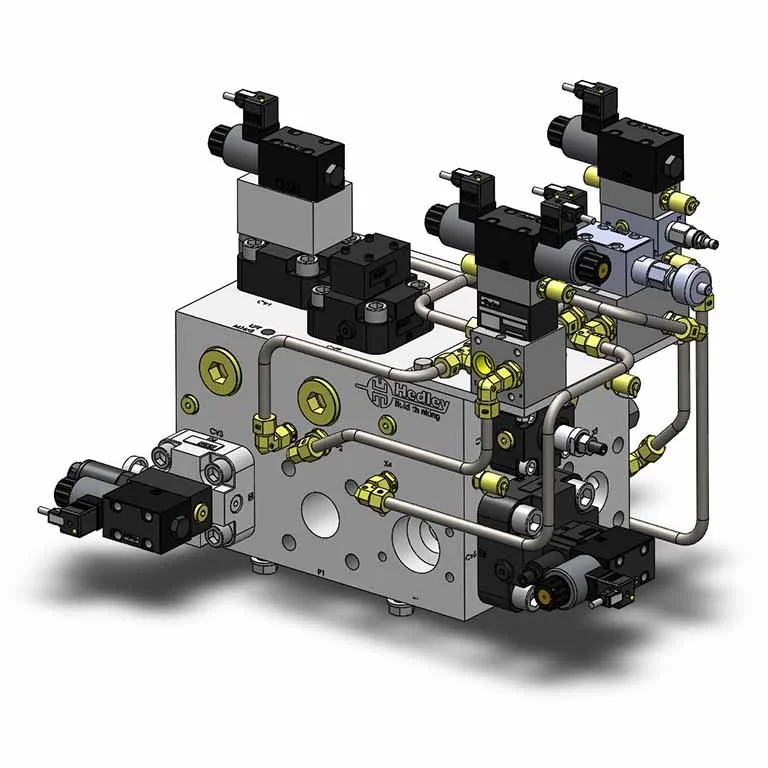
Hydraulic manifold blocks are precision-machined components designed to distribute hydraulic fluid within a hydraulic system. Rather than connecting valves and components through extensive pipework or multiple hoses, manifolds provide a single solid block that contains internal passages to direct fluid flow.
These internal channels allow hydraulic fluid to move efficiently between pumps, valves and actuators. By consolidating these pathways into one block, manifolds simplify the layout of a hydraulic system and reduce the number of external connections required.
Hydraulic manifolds are typically manufactured from materials such as aluminium, steel or ductile iron, depending on the system’s pressure rating and environmental conditions. Aluminium manifolds are often used in lightweight or lower-pressure systems, while steel or iron blocks are preferred for heavy-duty industrial applications.
Today, hydraulic manifold blocks are widely used in industries such as:
- Manufacturing and automation
- Construction and mobile machinery
- Agricultural equipment
- Marine and offshore systems
- Material handling and lifting equipment
Because they streamline fluid distribution and improve reliability, manifolds have become a fundamental component in modern hydraulic system design.
How Hydraulic Manifolds Improve System Configuration
One of the biggest advantages of using hydraulic manifold blocks is their ability to simplify overall hydraulic system configuration. Traditional hydraulic systems often relied on complex pipework or multiple hose assemblies to connect valves and actuators. While functional, this approach can create bulky systems with many potential leak points.
Manifold blocks solve this problem by consolidating fluid pathways into a single component. This approach provides several important benefits.
Reduced Pipework and Hoses
By replacing external pipework with internal passages, manifolds significantly reduce the number of hoses and fittings required in a hydraulic system. This makes installations cleaner, more compact and easier to manage.
Lower Risk of Leaks
Every fitting or hose connection in a hydraulic system introduces a potential leak point. By reducing the number of external connections, manifolds help improve system reliability and reduce maintenance issues.
More Compact System Layouts
Space constraints are common in modern machinery. A well-planned manifold design allows valves and components to be mounted directly onto the manifold block, reducing the overall footprint of the hydraulic system.
Easier Maintenance and Troubleshooting
Because the system is organised around a central manifold, technicians can more easily access and service valves and components. This simplifies maintenance procedures and reduces downtime.
Improved Efficiency
Optimised flow paths inside the manifold can reduce pressure drops and improve fluid efficiency throughout the system.
Key Types of Hydraulic Manifold Blocks
Hydraulic manifold blocks come in a range of configurations designed to suit different system requirements.
Single-Station Manifolds
Single-station manifolds are designed to house one valve or hydraulic component. They are commonly used in simpler hydraulic systems where only one control function is required.
These manifolds are compact and cost-effective, making them suitable for straightforward hydraulic circuits.
Multi-Station Manifolds
Multi-station manifolds allow several valves to be mounted within the same block. Each station controls a different hydraulic function, such as lifting, rotating or clamping.
This configuration is widely used in industrial machinery where multiple hydraulic operations must be managed simultaneously.
Modular Manifolds
Modular manifold systems allow additional sections to be stacked or connected together. This design offers flexibility and scalability, enabling systems to be expanded or modified as operational requirements change.
Custom Hydraulic Manifolds
Custom manifolds are specifically engineered to meet the unique requirements of a particular hydraulic system. They are designed to optimise fluid flow, reduce component count and ensure the most efficient routing of hydraulic passages.
While custom manifolds typically involve a higher upfront design investment, they often deliver significant long-term benefits in performance, efficiency and space savings.
Key Factors to Consider When Choosing a Hydraulic Manifold Block
Selecting the correct manifold block requires consideration of several technical factors.
System Pressure and Flow Requirements
One of the most important considerations is the operating pressure and flow rate of the hydraulic system. The manifold must be designed to handle these requirements safely without restricting fluid flow.
Incorrect sizing can lead to pressure losses, overheating or component failure.
Valve Compatibility
Hydraulic manifolds are typically designed to accommodate specific valve standards, such as CETOP or ISO interfaces. Ensuring compatibility between the manifold and the valves being used is essential for proper installation and operation.
Space and Mounting Constraints
The available installation space often plays a major role in determining the best manifold design. Compact manifolds allow multiple components to be integrated into a smaller area, which can be particularly beneficial in mobile equipment or tight machinery layouts.
Environmental Conditions
Hydraulic systems may operate in harsh environments, including outdoor locations, marine settings or high-temperature industrial facilities. The manifold material and protective coatings should be chosen to withstand these conditions.
Maintenance and Future Expansion
When planning a hydraulic system configuration, it’s also important to consider future servicing and potential system expansion. A well-designed manifold should allow easy access to valves and provide flexibility for system upgrades if required.
The Hydraulic Manifold Design Process
Developing an effective manifold design typically involves several stages, each focused on ensuring the manifold performs reliably within the hydraulic system.
#1: System Requirements Analysis
Engineers begin by analysing the hydraulic circuit requirements, including flow rates, pressure levels and system functions.
#2: Hydraulic Circuit Design
A schematic diagram is developed to map out how hydraulic fluid will move through the system and which valves or components will control each function.
#3: Flow Path Optimisation
Engineers design the internal passages of the manifold to ensure smooth fluid flow while minimising pressure drops and turbulence.
#4: CAD Modelling
Advanced computer-aided design software is used to model the manifold block, ensuring accurate component placement and efficient internal routing.
#5: Stress and Pressure Testing
Simulation tools are used to verify that the manifold will withstand operating pressures and mechanical stresses.
#6: Manufacturing and Testing
Once the design is finalised, the manifold is precision-machined and tested to ensure it meets performance and safety standards.
Common Mistakes When Selecting Hydraulic Manifold Blocks
Despite their advantages, hydraulic manifolds must be chosen carefully. Some common selection mistakes include:
- Choosing a manifold that is too small for the required flow rate
- Ignoring pressure ratings or safety margins
- Overlooking maintenance access when positioning valves
- Using standard manifolds when a custom solution would significantly improve efficiency
- Failing to consider system expansion requirements
Avoiding these issues can help ensure a reliable and efficient hydraulic system.
Custom vs Standard Manifolds: Which Is Best?
Both standard and custom manifold solutions have their place in hydraulic system design.
Standard manifolds are typically faster to source and may offer lower upfront costs. They work well in simpler systems where valve configurations follow common layouts.
Custom manifolds, on the other hand, allow engineers to optimise the entire hydraulic system configuration. By integrating multiple functions into a single block and carefully designing the internal flow paths, custom manifolds can reduce fittings, minimise pressure losses and create more compact installations.
For complex hydraulic systems, custom designs often deliver the best long-term performance.
How the Right Manifold Improves System Performance
Selecting the right hydraulic manifold block can have a major impact on system efficiency and reliability.
A well-designed manifold helps to:
- Reduce pressure drops throughout the system
- Improve hydraulic response times
- Simplify installation and maintenance
- Reduce leak risks
- Extend the lifespan of hydraulic components
Because manifolds form the core of fluid distribution, their design plays a key role in the overall success of a hydraulic system.
Final Thoughts
Hydraulic manifold blocks are essential components in modern hydraulic systems, providing a centralised and efficient way to distribute fluid between valves and actuators.
By simplifying pipework, reducing leak points and enabling compact system layouts, manifolds help improve both performance and reliability. However, choosing the right manifold requires careful consideration of system pressure, flow requirements, valve compatibility and environmental conditions.
Whether selecting a standard solution or developing a custom manifold design, taking the time to properly plan your hydraulic system configuration will help ensure optimal performance and long-term reliability.
FAQs
What is a hydraulic manifold block?
A hydraulic manifold block is a machined metal component that distributes hydraulic fluid between valves, pumps and actuators within a hydraulic system.
Why are hydraulic manifold blocks used?
They simplify hydraulic system layouts, reduce the amount of pipework required, and lower the risk of leaks by consolidating fluid pathways into a single block.
What materials are hydraulic manifold blocks made from?
Hydraulic manifold blocks are commonly manufactured from aluminium, steel or ductile iron depending on the pressure rating and environmental conditions of the system.
How do I know if I need a custom hydraulic manifold?
If your hydraulic system has complex flow requirements, space limitations or multiple control functions, a custom manifold design may provide better efficiency and reliability.
Are hydraulic manifolds better than traditional pipe systems?
In many cases, yes. Manifolds reduce the number of external fittings and hoses, which simplifies installation, improves reliability and makes maintenance easier.
What industries use hydraulic manifold blocks?
Hydraulic manifolds are widely used in manufacturing, construction equipment, agriculture, marine systems and industrial automation.