
Advantages of Manifold Blocks vs Traditional Pipework
/ 2
Hydraulic systems need an effective way to direct fluid between pumps, valves, cylinders and motors. Traditionally, this has often involved networks of pipes, hoses and fittings. However, hydraulic manifold blocks offer an alternative by incorporating multiple fluid passages into a single engineered component.
Both approaches have a place in hydraulic system design. The best choice depends on the application, operating conditions, available space and long-term maintenance requirements.
Understanding the differences between a hydraulic manifold block and traditional pipework can help engineers choose a configuration that balances performance, reliability and cost.
What Is a Hydraulic Manifold Block?
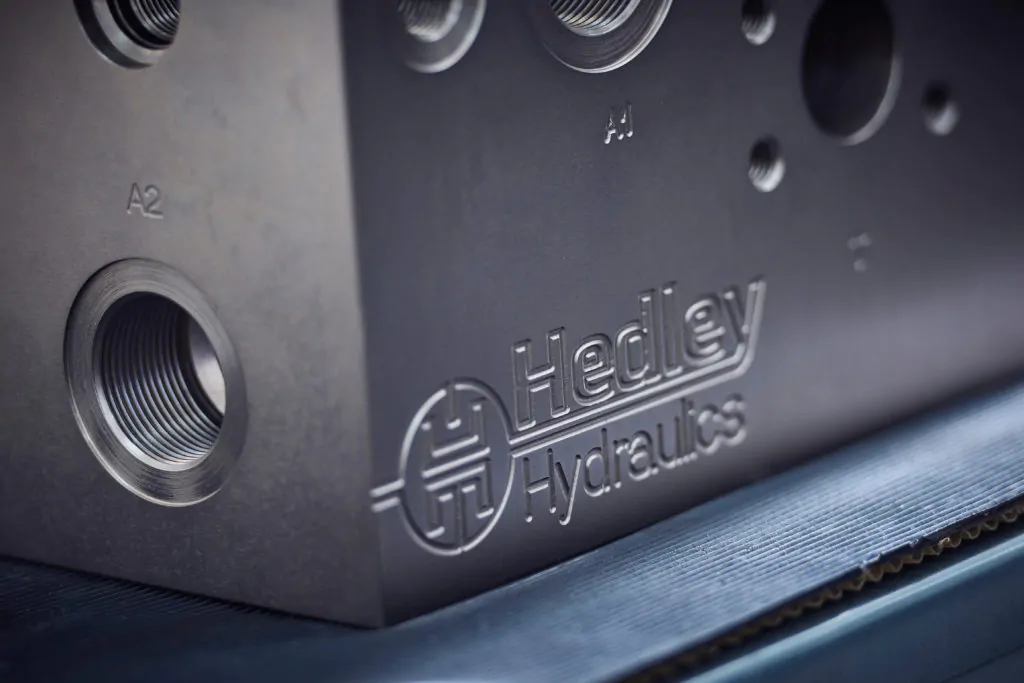
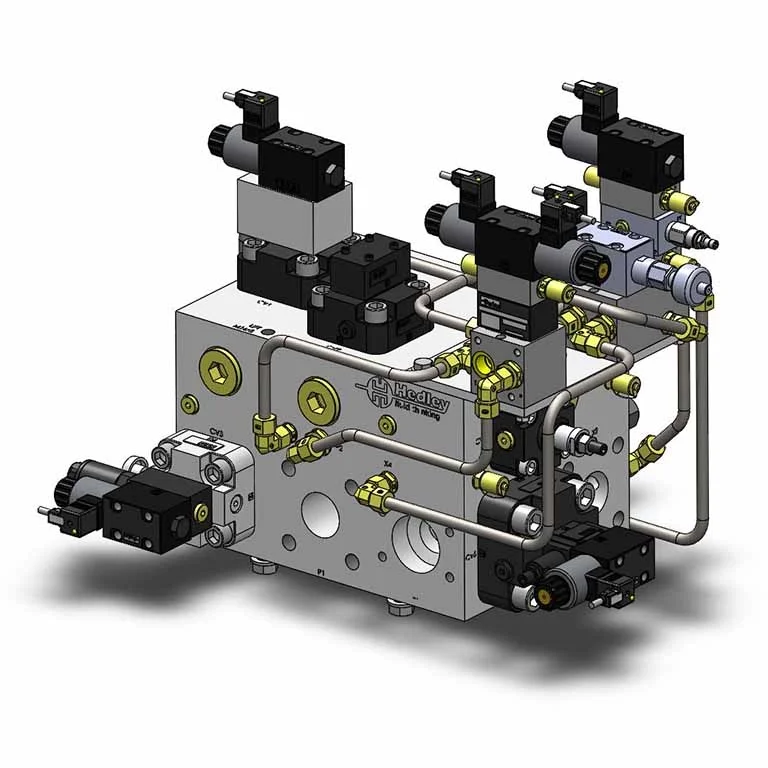
A hydraulic manifold block is a machined component containing internal passages that direct hydraulic fluid between different parts of a system. Valves and other components can be mounted directly onto the block, reducing the need for separate external connections.
Manifolds can be designed around standard valve interfaces or manufactured to meet specific application requirements. Custom designs allow engineers to optimise the arrangement of valves and internal flow paths for the system.
Hedley Hydraulics designs custom manifolds using 2D hydraulic schematics and 3D modelling software, helping customers develop solutions around their operating requirements.
What Is Traditional Hydraulic Pipework?
Traditional pipework uses separate pipes, hoses, fittings and connectors to link components throughout a hydraulic circuit.
This approach can be effective where components are distributed across a machine, where connections need to accommodate movement, or where pipe routes must follow an existing installation.
Pipework can also be modified or replaced individually, although extensive networks may require considerable space and create multiple potential leak points.
The Advantages of Hydraulic Manifold Blocks
- Reduced connections and leak points
One of the main manifold block advantages is the ability to replace multiple external connections with internal fluid passages. Reducing the number of pipes, hoses and fittings can simplify the circuit and reduce potential leakage locations. This can be particularly beneficial in compact machinery or systems where access for maintenance is limited.
- Compact system design
By mounting valves directly onto a manifold, engineers can consolidate hydraulic functions into a smaller space. This can make equipment easier to package, particularly where several control functions need to be housed together.
- Improved system integration
Custom hydraulic manifolds allow engineers to design the fluid paths around the specific requirements of an application. A carefully designed block can support efficient flow, simplify component positioning and make the overall arrangement easier to understand and maintain.
- Consistent assembly
A manifold can provide a defined arrangement for valves and connections, supporting repeatable assembly where equipment is manufactured or serviced in multiple units. However, the benefits depend on good design, appropriate machining and effective cleanliness controls during manufacture.
The Limitations of Manifold Blocks
Despite their advantages, manifolds are not always the right choice.
- Initial design and manufacturing costs
Custom hydraulic manifolds may require engineering time, specialist machining and validation. For a simple circuit, this investment may not be justified. - Limited flexibility after manufacture
Changing internal passages can be difficult or impractical once a block has been manufactured. Systems likely to undergo frequent redesign may benefit from a more adaptable arrangement.
- Maintenance access
Components mounted closely together can be harder to access if the manifold is poorly positioned or does not allow sufficient space for servicing.
- Flow and pressure considerations
Internal passages must be sized and designed correctly. Poorly designed flow paths can create pressure losses, turbulence or excessive heat.
When Is Traditional Pipework the Better Option?
Traditional pipework may be preferable where components are spread across a large installation or need to be connected over significant distances. It can also suit projects where the layout is likely to change or where individual sections must be replaced without redesigning a complete manifold.
For example, a system with remotely positioned cylinders and moving machinery may still require hoses or pipes even if a manifold controls the main hydraulic circuit. In practice, many installations use a combination of manifolds and pipework. A manifold may consolidate control valves near the power unit, while pipes and hoses carry fluid to actuators elsewhere on the machine.
Custom Hydraulic Manifolds: What Should Engineers Consider?
When assessing custom hydraulic manifolds, engineers should consider more than the physical dimensions of the block. Important factors include operating pressure, flow rate, valve compatibility, fluid cleanliness, material requirements and the environment in which the system will operate.
Maintenance access and future servicing should also be considered during the design stage. A compact solution is only beneficial if components remain accessible and the system can be maintained effectively. Hedley Hydraulics can design manifolds to customer specifications, using hydraulic circuit design and 3D modelling to help develop a solution for the application. Explore the hydraulic manifold block range at Hedley Hydraulics or discuss your requirements with the engineering team.
Choosing the Right Solution
Neither manifold blocks nor traditional pipework is universally better. Manifolds can offer a compact, integrated solution with fewer external connections, while pipework provides flexibility for distributed components and changing layouts. The most effective design depends on the complete hydraulic circuit, including performance requirements, installation constraints and maintenance needs. By assessing these factors early, engineers can develop hydraulic systems that are practical to install, efficient to operate and straightforward to maintain.